

UX for Hospitality
Website UX
Website Redesigns That Actually Work
Website Redesigns That Actually Work
And How I Helped a Boutique Hotel Boost Bookings
2 mar 2026
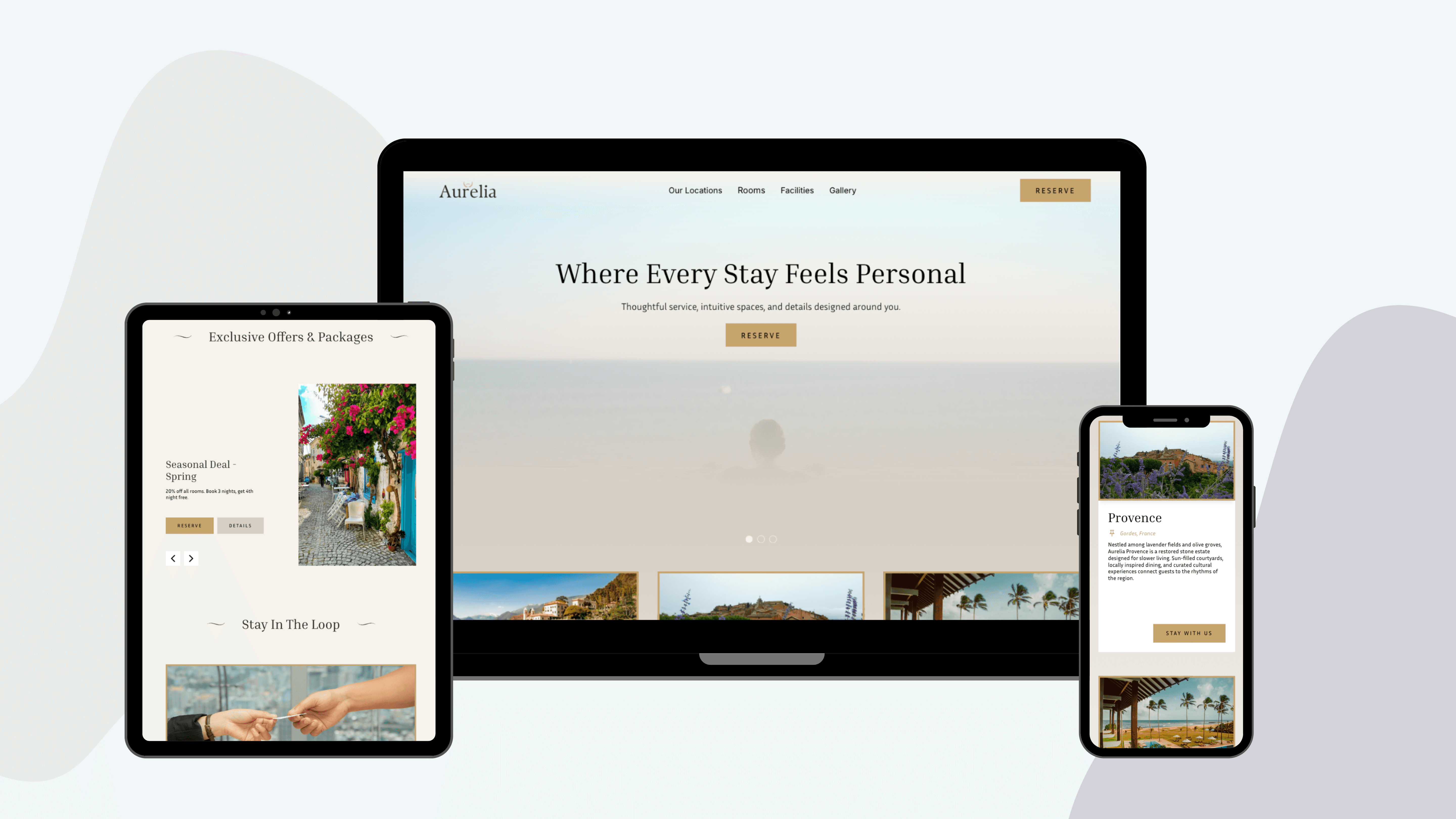
New responsive design
If your hotel website looks like it’s still rocking a 2010 vibe with Comic Sans somewhere hidden in the footer… well, you might think it’s time for a redesign. And yes, making things look pretty is tempting. But here’s the kicker: a fresh coat of pixels alone doesn’t make your site better for guests- or more profitable for you.
Modern web design is wild these days. Some big hotel brands have websites that feel more like interactive storytelling experiences than booking tools. They wow you with animations, full-screen video headers, and scroll-triggered micro-interactions. On a desktop, it’s impressive. On mobile, while someone’s juggling a coffee and a backpack? Not so much.
Studies and industry experts agree: redesigns shouldn’t be about looking cool - they should be about helping your users get what they want without losing their minds. [Insert link to Article 1] [Insert link to Article 2]
The Real Point of a Redesign
A website redesign isn’t just a facelift. It’s a strategic opportunity to make your site work better:
Faster, smoother navigation - no guessing which menu item leads where.
Mobile-friendly flow - because most travellers are browsing on their phones, not giant monitors.
Clear calls-to-action - so visitors book a room instead of wandering around confused.
Research shows a UX-focused redesign can boost sign-ups or bookings dramatically. Airbnb, for example, pairs stunning visuals with clear, frictionless booking flows. Aesthetic alone doesn’t sell a night’s stay; usability does. And a balance of both? That’s when magic happens.
Aesthetics vs. Functionality
Yes, your site should look good. But beauty without clarity is frustrating. Users leave. They abandon carts. They bounce. Purely functional designs without appeal? They feel dated, boring, and cheap.
Good redesigns marry function and flair: whitespace isn’t just for looks - it guides the eye. Micro-interactions make buttons and forms feel alive. Imagery tells a story, but not at the cost of hiding the booking button under a six-second animation.
How to Know Where to Start
Here’s where many small hospitality owners get lost: they think a redesign starts with colours and fonts. Truth is, it starts with understanding your users and their frustrations. When you start a redesign, what matters is seeing where people get stuck or confused.
Professional audits (for example the kind I offer) dig into how guests actually navigate your site, where they hesitate, and what stops them from booking. They show you the real opportunities to improve, so any redesign actually helps your business.
Redesigning a Boutique Hotel Website

Let me give you a behind-the-scenes look at a recent project: a boutique hotel with three locations, all charming, but with a website that… well, wasn’t helping guests or conversions. Guests couldn’t easily tell one from another. Room details were scattered, each section rocked multiple buttons, making the users wonder and get lost. Literally.
I started by auditing the entire site. Every page, every link, every menu item was reviewed. I looked for friction points: confusing navigation, inconsistent labeling, and hidden calls-to-action. Then I grouped everything logically, restructuring the sitemap so that visitors could instantly understand where to find information for each location. No guesswork, no clutter.
Next came the redesign. I built the new site in Framer, taking advantage of its flexible CMS features to make content management simple for the hotel staff. I created layouts that highlighted what matters most: the unique feel of each location, key promotions, and a crystal-clear path to booking.
Throughout the process, I focused on measurable outcomes. Each change- menu structure, homepage layout, booking flow- was designed to improve key metrics the hotel cared about: completed bookings, time on key pages, and visitor drop-off points. The results spoke for themselves: guests navigated the site more easily, stayed longer, and the hotel saw a noticeable increase in completed bookings.
This wasn’t about trends or flashy animations. It was about taking a chaotic site, applying a professional audit, and transforming it into an experience that guides visitors naturally from inspiration to reservation. A redesign done right- beautiful, functional, and effective.
If your hotel website looks like it’s still rocking a 2010 vibe with Comic Sans somewhere hidden in the footer… well, you might think it’s time for a redesign. And yes, making things look pretty is tempting. But here’s the kicker: a fresh coat of pixels alone doesn’t make your site better for guests- or more profitable for you.
Modern web design is wild these days. Some big hotel brands have websites that feel more like interactive storytelling experiences than booking tools. They wow you with animations, full-screen video headers, and scroll-triggered micro-interactions. On a desktop, it’s impressive. On mobile, while someone’s juggling a coffee and a backpack? Not so much.
Studies and industry experts agree: redesigns shouldn’t be about looking cool - they should be about helping your users get what they want without losing their minds. [Insert link to Article 1] [Insert link to Article 2]
The Real Point of a Redesign
A website redesign isn’t just a facelift. It’s a strategic opportunity to make your site work better:
Faster, smoother navigation - no guessing which menu item leads where.
Mobile-friendly flow - because most travellers are browsing on their phones, not giant monitors.
Clear calls-to-action - so visitors book a room instead of wandering around confused.
Research shows a UX-focused redesign can boost sign-ups or bookings dramatically. Airbnb, for example, pairs stunning visuals with clear, frictionless booking flows. Aesthetic alone doesn’t sell a night’s stay; usability does. And a balance of both? That’s when magic happens.
Aesthetics vs. Functionality
Yes, your site should look good. But beauty without clarity is frustrating. Users leave. They abandon carts. They bounce. Purely functional designs without appeal? They feel dated, boring, and cheap.
Good redesigns marry function and flair: whitespace isn’t just for looks - it guides the eye. Micro-interactions make buttons and forms feel alive. Imagery tells a story, but not at the cost of hiding the booking button under a six-second animation.
How to Know Where to Start
Here’s where many small hospitality owners get lost: they think a redesign starts with colours and fonts. Truth is, it starts with understanding your users and their frustrations. When you start a redesign, what matters is seeing where people get stuck or confused.
Professional audits (for example the kind I offer) dig into how guests actually navigate your site, where they hesitate, and what stops them from booking. They show you the real opportunities to improve, so any redesign actually helps your business.
Redesigning a Boutique Hotel Website
Let me give you a behind-the-scenes look at a recent project: a boutique hotel with three locations, all charming, but with a website that… well, wasn’t helping guests or conversions. Guests couldn’t easily tell one from another. Room details were scattered, each section rocked multiple buttons, making the users wonder and get lost. Literally.
I started by auditing the entire site. Every page, every link, every menu item was reviewed. I looked for friction points: confusing navigation, inconsistent labeling, and hidden calls-to-action. Then I grouped everything logically, restructuring the sitemap so that visitors could instantly understand where to find information for each location. No guesswork, no clutter.
Next came the redesign. I built the new site in Framer, taking advantage of its flexible CMS features to make content management simple for the hotel staff. I created layouts that highlighted what matters most: the unique feel of each location, key promotions, and a crystal-clear path to booking.
Throughout the process, I focused on measurable outcomes. Each change- menu structure, homepage layout, booking flow- was designed to improve key metrics the hotel cared about: completed bookings, time on key pages, and visitor drop-off points. The results spoke for themselves: guests navigated the site more easily, stayed longer, and the hotel saw a noticeable increase in completed bookings.
This wasn’t about trends or flashy animations. It was about taking a chaotic site, applying a professional audit, and transforming it into an experience that guides visitors naturally from inspiration to reservation. A redesign done right- beautiful, functional, and effective.
Let's Talk!
Are you a small hospitality business owner who wants clearer online setup, smoother guest communication, or simply less admin stress?