HOSPITALITY
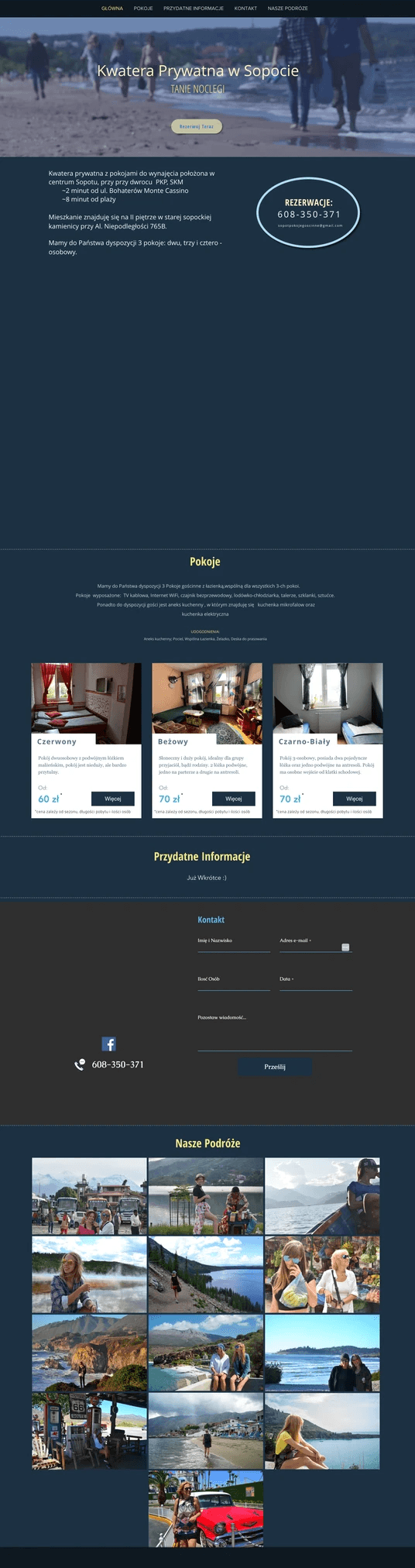
I audited the website, analysed user behaviour, and redesigned the user experience to fix low conversions and build a clear, mobile-first path from Instagram traffic to sign-ups.


Project Type:
Guest journey audit | Workflow optimisation | Website redesign
Timeline:
2 weeks
Tools:
Miro | Wix Editor | Airbnb
Problem
The owner was dealing with too many low-quality enquiries, manual coordination across multiple channels, and risk from unsecured private bookings.
Guests encountered:
Outdated prices and contact details on third-party sites
Confusion about where and how to book
No clear source of truth for availability, pricing, or rules
Role:
I led the project end to end, working directly with the property owner to understand their booking setup, operational challenges and concerns. I audited the full guest journey across all entry points, then defined a simplified, security-first approach centred on Airbnb. This included optimising the Airbnb listing and automated communications, and redesigning the website to support the new workflow by clearly setting expectations and reducing admin effort.
1 booking path
single, defined journey from discovery to booking.
0 unsecured bookings
private bookings removed from the workflow.
Clear expectations
pricing, rules, and arrival details set upfront.
Let’s audit, optimise, and redesign what matters most to your users and your team.
Empathise & Discover
To understand what was driving guest confusion, admin overload, and security risk, I first focused on how the booking journey worked in real life - from first discovery to arrival.
Consultation
The project began with a consultation with the property owner to understand the current setup, day-to-day workflow, and the main sources of friction.
The most important things for me to understand at this stage were:
how guests currently find the property
what enquiry and booking channels are in use (website, Airbnb, portals, calls, messages)
what messages and information guests receive before arrival
how availability, pricing, and minimum stay rules are communicated
where the owner experiences the biggest workload, misunderstandings and issues
This confirmed early concerns around fragmented booking paths, repetitive enquiries, and private bookings that bypassed verification and deposit safeguards.
Mystery shopping
Next, I went through the journey as a guest to validate the owner’s perspective and identify friction that wouldn’t surface in conversation alone.
This involved:
searching for the property online and locating all visible listings
checking whether pricing and information matched across platforms
assessing how clear the booking path was from each entry point
reviewing the clarity of self-check-in expectations and pre-arrival info
This step showed how easily guests could find outdated information, follow inconsistent paths, and end up enquiring or booking outside of the intended system
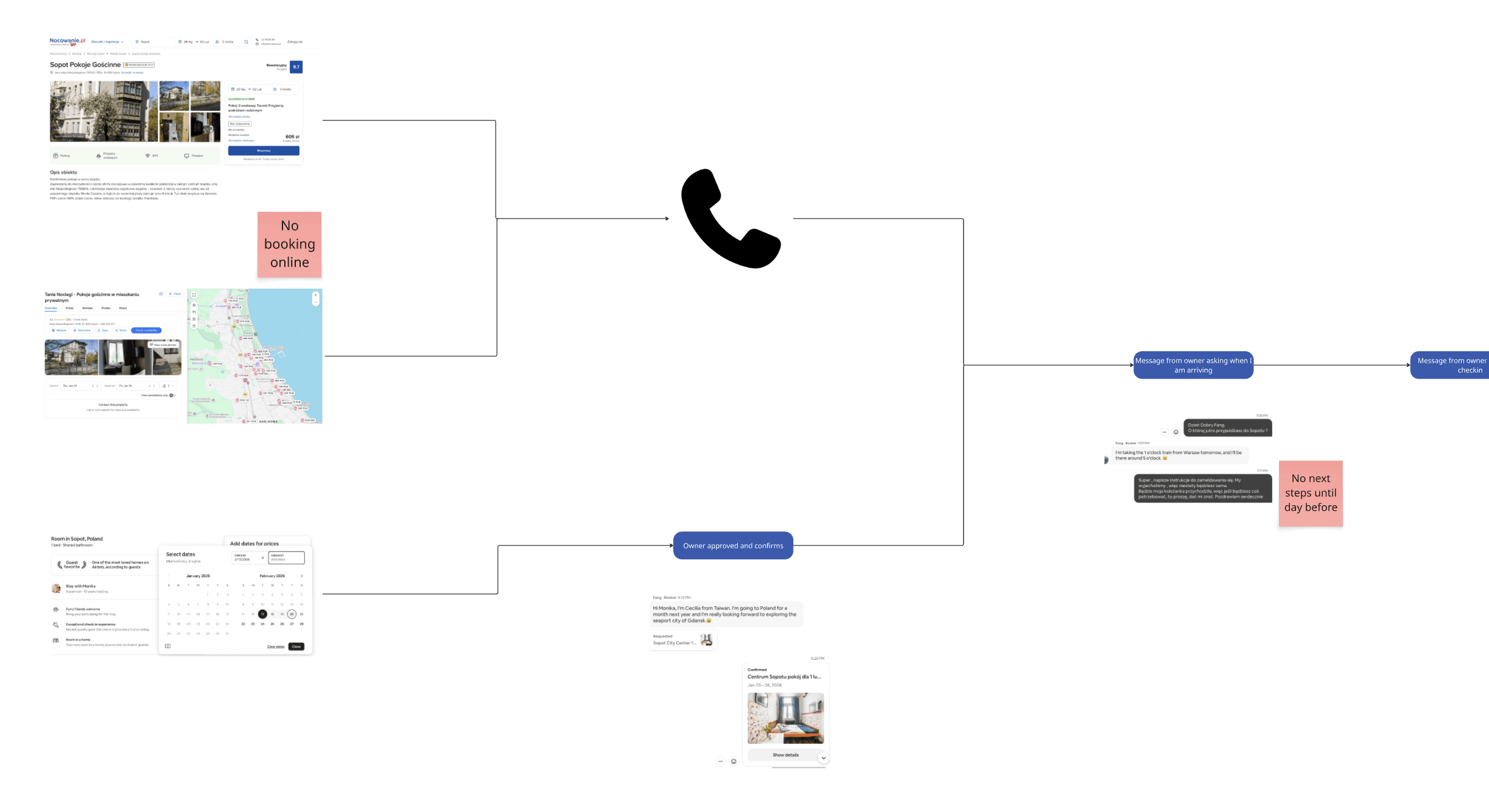
A fragment of a map of mystery shop journey with screenshots
DEFINE
With the discovery insights validated, the next step was to clearly define the structure of the guest journey and identify where it was breaking down for both guests and the property owner.
User journey mapping
At this stage, I mapped the end-to-end guest journey to understand how many steps, tools, and decisions were involved before a booking was completed.
The journey mapping highlighted:
how fragmented and overcomplicated the booking process had become
where uncertainty and hesitation were introduced
which moments created the highest volume of follow-up questions
where the admin workload was too high
This exercise also surfaced early opportunities for improvement, which were explored and reviewed further during the research phase.
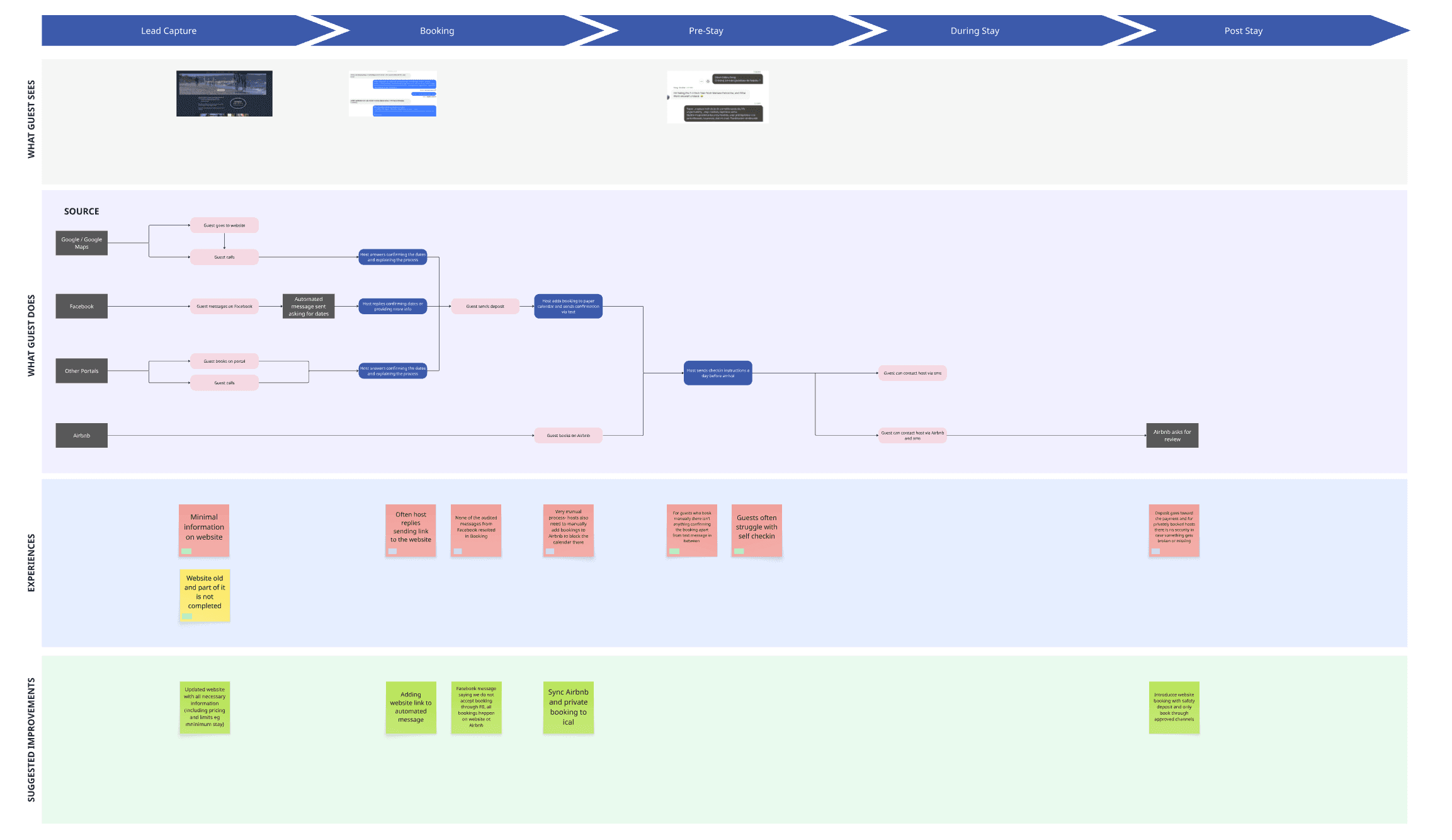
A user journey of the full discovery to post-stay journey of a guest. This is what UX and service designers use to understand the full flow and highlight friction points.
Desktop research
To support decision-making, desktop research was carried out in two parallel areas: industry standards for this type of vacation rental, and the feasibility of the early improvement directions identified through the journey mapping.
Industry standards
This research focused on how guests typically interact with short-stay and hospitality websites, and what patterns support faster decision-making and lower drop-off.
Key findings included:
Clear booking flow above the fold: guests primarily visit to check pricing and availability, and a visible booking path reduces friction and abandonment.
Softer CTA language (“Start Planning”): less forceful CTAs feel more approachable than “Book Now” and reduce perceived pressure.
Fast access to essentials: users expect immediate access to photos, pricing, amenities, and location without navigating decorative or story-heavy layouts.
Designed for mobile browsing and desktop booking: many guests browse on mobile but complete bookings on desktop, requiring both experiences to be optimised.
Feasibility of early solutions
In parallel, I assessed the feasibility of the early improvement directions highlighted by the journey mapping.
This involved evaluating:
whether changes could be implemented within the owner’s existing tools, workflows and budget
which improvements reduced risk without adding operational complexity
how different approaches would impact admin effort, guest clarity, and property security
This allowed unrealistic or high-risk ideas to be ruled out early and narrowed the focus to solutions that were both effective and sustainable.
Findings & report
The outputs from the journey mapping and both strands of research were consolidated into a Discovery Outcome Pack.
The pack included:
a short summary of the research completed
the current process captured as a simplified, high-level journey
the key problems affecting both guests and the host, prioritised by severity
recommended approaches grouped into realistic options based on budget and effort
expected improvements from each approach (guest clarity, admin effort, and security)
This pack was shared with the property owner and used as the decision-making reference before moving into the design phase.
DESIGN
With priorities aligned and a clear direction agreed, the next step was to design a solution that reduced risk, simplified the booking journey, and supported the owner operationally.
Workflow redesign
Based on the discovery findings, I proposed two alternative approaches to address the owner’s top problem: lack of control and security across booking channels.
For the first phase, the owner chose to consolidate all bookings through Airbnb, prioritising security, verification, and established guest safeguards. This decision allowed the property to rely on Airbnb’s identity checks, deposits, and structured communication rather than managing these manually.
Following this decision, the workflow was redesigned to support a single booking path. This involved removing listings from other platforms, tightening the Airbnb listing content, and configuring automated Airbnb messages to ensure the guests understood the next steps and reduce admin workload.

A plan of automated Airbnb messages to reduce admin load
Website redesign
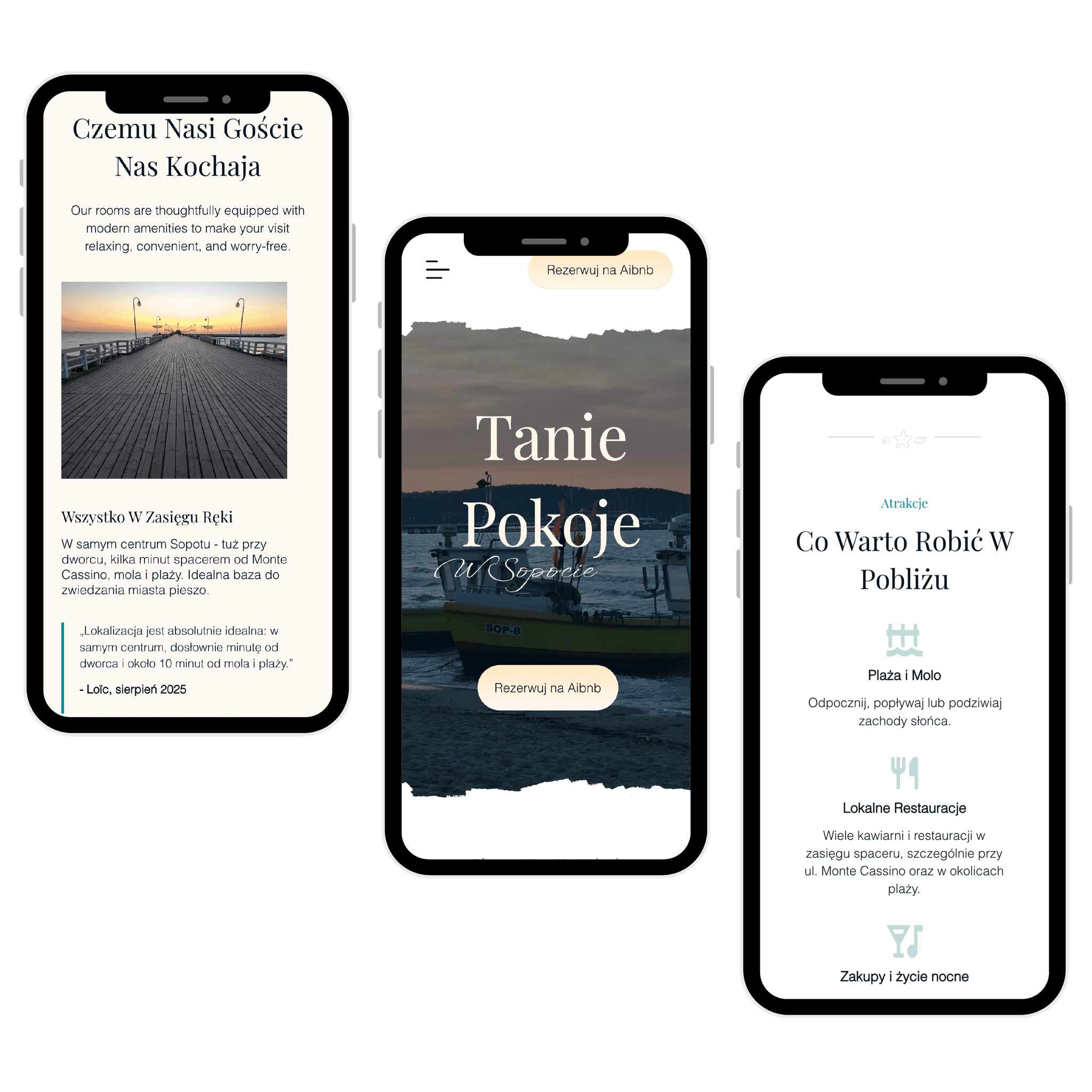
With Airbnb established as the primary booking channel, the website was redesigned to support this workflow rather than act as a competing booking tool.
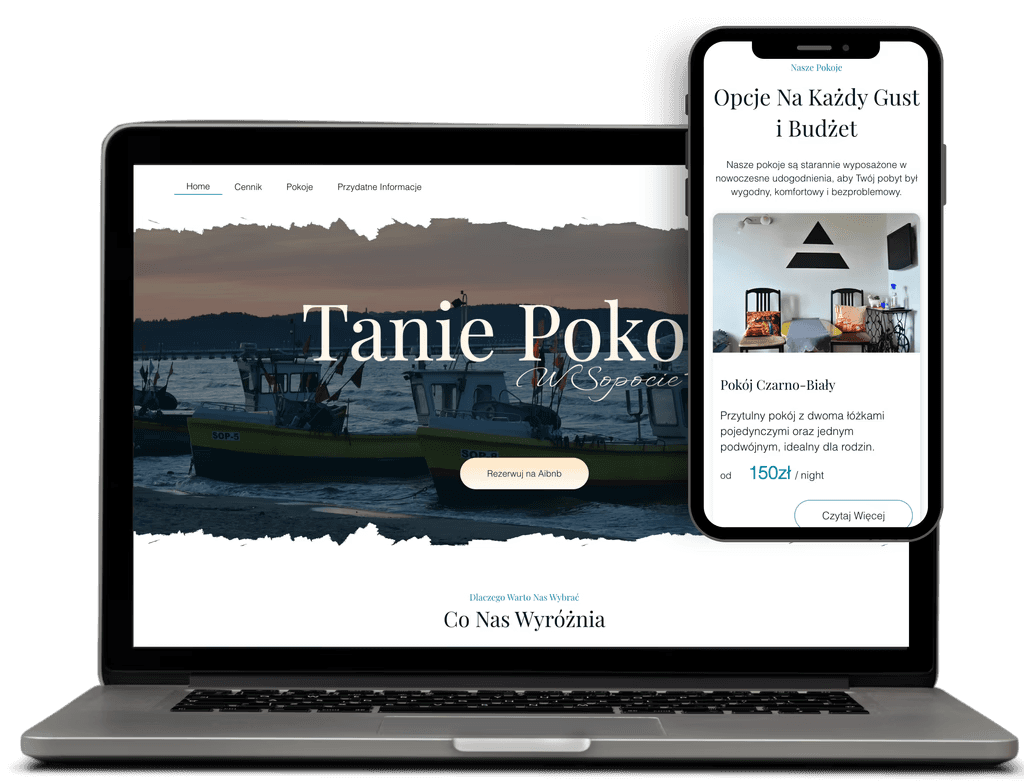
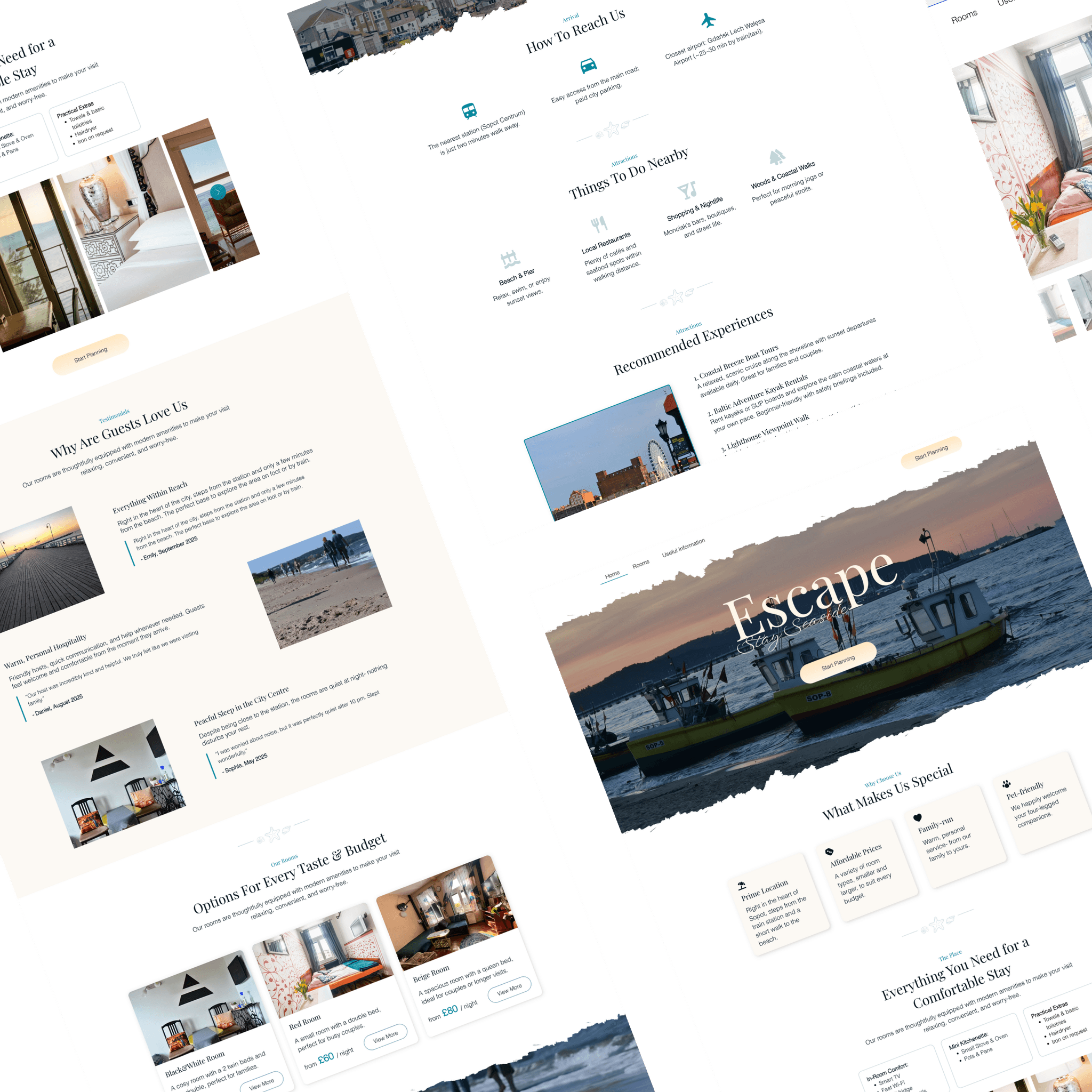
The website focused on setting clear expectations upfront and guiding guests toward the correct booking path. A dedicated “Why Airbnb?” page was introduced to explain what Airbnb is, why bookings are handled through the platform, and how this benefits both guests and the property owner. This helped reduce confusion for guests unfamiliar with Airbnb and lowered the volume of follow-up enquiries.
The redesigned site acted as a clear information hub, reinforcing trust, clarity, and consistency across the entire booking experience.
Test & REFINE
Throughout the project, findings and design decisions were reviewed with the property owner to ensure the solution remained practical and aligned with real operational needs.
Proposed changes to the booking workflow, Airbnb setup, and website structure were discussed and adjusted based on feedback, with a focus on reducing admin effort, improving guest clarity, and maintaining security. This collaborative approach helped validate decisions before implementation and avoided introducing unnecessary complexity.
The final outcome was a simplified, controlled booking system supported by a clear website, resulting in fewer repetitive enquiries, improved guest understanding before arrival, and greater protection for the property.
impact & outcomes
The final outcome was a simplified, controlled booking system supported by a clear website, resulting in fewer repetitive enquiries, improved guest understanding before arrival, and greater protection for the property.
Key outcomes included:
reduced volume of repetitive enquiries
clearer guest expectations before booking and arrival
simplified admin workflow centred on a single booking platform
increased security through verified bookings and deposits
a modern website that supports, rather than competes with, the booking process
This setup created a scalable foundation for future seasons while significantly lowering operational risk and overhead.
Before & After