

UX for Hospitality
Pro Tips
Your Website Makes Sense… Until It Doesn’t - Easiest Way to Fix The Most Common Website Mistakes
Your Website Makes Sense… Until It Doesn’t - Easiest Way to Fix The Most Common Website Mistakes
What a Reddit Conversation Revealed About DIY Hospitality Websites
10 Dec 2025
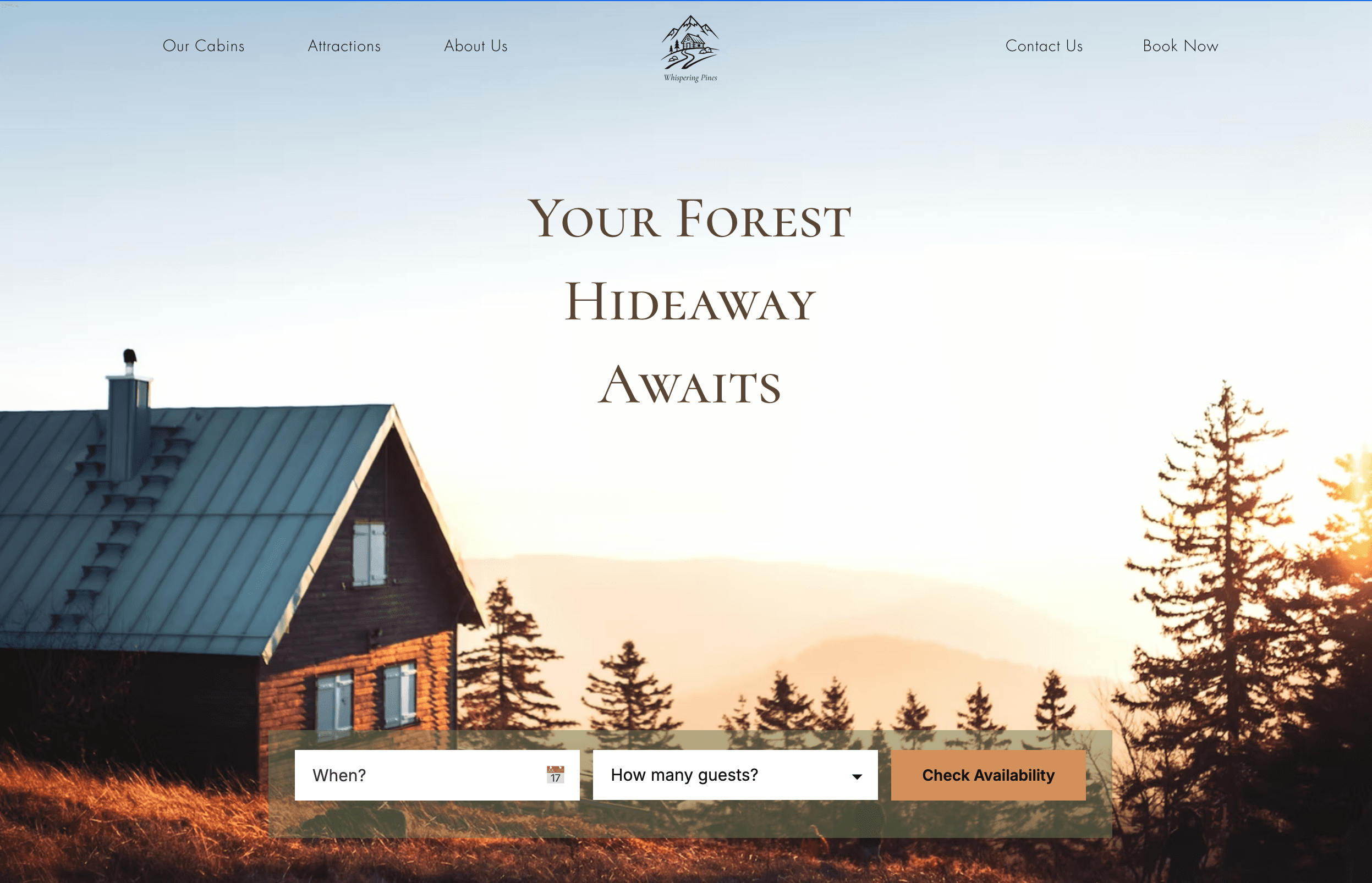
Example of a cabin website with a clear above-the-fold booking flow.
A few weeks ago I went on Reddit and asked hospitality owners one simple question:
“Do you ever worry your website isn’t performing the way you think it is?”
I see the same struggle over and over with boutique hotels, cabins, B&Bs, vacation rentals and short-stay hosts who run their own websites.
One reply summed it up perfectly:
“You look at it and think it’s clear, but guests will call or email asking stuff that’s right there on the page. That’s when you realize what makes sense to you doesn’t always make sense to them… Running your own site is great for control, but it’s also one long guessing game.”
The same owner shared the insights they got simply by asking a few repeat guests for feedback:
Room differences weren’t explained clearly
The booking button blended in too much
Parking information was worded in a confusing way
None of this appeared in their analytics.
But it all surfaced in a five-minute conversation.
And that’s the real lesson for hospitality websites.
👉 If you manage your own hospitality website and want a clearer picture of how well it works for guests, check out this DIY audit on Etsy.
(Now 75% off with 'HELLO2026' code)
What This Teaches Us About Improving Hospitality Websites
1. Owners don’t see what guests see
When you manage your own website, you stop noticing unclear or missing details.
Guests see them immediately.
This is the classic curse of knowledge - you know your property so well that your brain fills in the gaps.
2. Analytics only tell you what happens. Guests tell you why.
Your analytics might show:
high bounce rates
exit pages
abandoned booking flows
But they won’t tell you:
“I didn’t understand the room types.”
“I couldn’t find the booking button.”
“The wording confused me.”
This is why hospitality websites often look fine but still underperform or fail to convert direct bookings.
3. Simple user testing beats expensive guesswork
You don’t need a research lab.
You can learn a surprising amount by:
asking two or three repeat guests
watching a friend try to book a room
asking someone to narrate what they see when landing on your homepage
Airbnb, Booking.com and Expedia all rely heavily on small usability sessions.
It works because real behaviour always reveals friction faster than data alone.
4. Small tweaks can lift direct bookings
Most issues guests raised were small fixes:
clearer copy
header that shows what you do
a more visible booking button
a better-structured rooms page
These are low-effort changes that can significantly improve booking conversions—especially for small hotels and short-stay rentals trying to increase direct bookings.
A Quick 5-Minute Exercise to Improve Your Website This Week
Ask one friend or family member:
“Can you try to book a room on my website? Talk out loud as you do it and tell me what makes sense and what doesn’t.”
You will learn more from that five-minute test than from a month of interpreting bounce rates.
Many Website Issues Can Be Prevented if You Know What to Look For
The most interesting part of the Reddit exchange is this:
The problems were obvious to guests, but not to the owner.
And they’re extremely common across hospitality websites.
Confusing room descriptions.
Unclear amenities.
Hidden booking buttons.
Too much text.
Poor hierarchy.
Unclear steps in the booking journey.
These aren’t unusual - they’re patterns.
And most of them can be caught early if you know what matters to guests when they try to book direct.
That’s why I built my DIY hospitality website audit.
Across boutique hotels, cabins, glamping sites, guesthouses and B&Bs, I kept seeing the same friction points:
missing clarity cues
important info buried too far down the page
calls to action blending into the design
layouts that overwhelm new visitors
booking flows with too many steps
User testing helps you see the blind spots.
An audit gives you a structured way to understand and prevent them.
Together, they remove the guesswork — and help your website convert more direct bookings.
👉 If you manage your own hospitality website and want a clearer picture of how well it works for guests, check out this DIY audit on Etsy.
(Now 75% off with 'HELLO2026' code)
A few weeks ago I went on Reddit and asked hospitality owners one simple question:
“Do you ever worry your website isn’t performing the way you think it is?”
I see the same struggle over and over with boutique hotels, cabins, B&Bs, vacation rentals and short-stay hosts who run their own websites.
One reply summed it up perfectly:
“You look at it and think it’s clear, but guests will call or email asking stuff that’s right there on the page. That’s when you realize what makes sense to you doesn’t always make sense to them… Running your own site is great for control, but it’s also one long guessing game.”
The same owner shared the insights they got simply by asking a few repeat guests for feedback:
Room differences weren’t explained clearly
The booking button blended in too much
Parking information was worded in a confusing way
None of this appeared in their analytics.
But it all surfaced in a five-minute conversation.
And that’s the real lesson for hospitality websites.
👉 If you manage your own hospitality website and want a clearer picture of how well it works for guests, check out this DIY audit on Etsy.
(Now 75% off with 'HELLO2026' code)
What This Teaches Us About Improving Hospitality Websites
1. Owners don’t see what guests see
When you manage your own website, you stop noticing unclear or missing details.
Guests see them immediately.
This is the classic curse of knowledge - you know your property so well that your brain fills in the gaps.
2. Analytics only tell you what happens. Guests tell you why.
Your analytics might show:
high bounce rates
exit pages
abandoned booking flows
But they won’t tell you:
“I didn’t understand the room types.”
“I couldn’t find the booking button.”
“The wording confused me.”
This is why hospitality websites often look fine but still underperform or fail to convert direct bookings.
3. Simple user testing beats expensive guesswork
You don’t need a research lab.
You can learn a surprising amount by:
asking two or three repeat guests
watching a friend try to book a room
asking someone to narrate what they see when landing on your homepage
Airbnb, Booking.com and Expedia all rely heavily on small usability sessions.
It works because real behaviour always reveals friction faster than data alone.
4. Small tweaks can lift direct bookings
Most issues guests raised were small fixes:
clearer copy
header that shows what you do
a more visible booking button
a better-structured rooms page
These are low-effort changes that can significantly improve booking conversions—especially for small hotels and short-stay rentals trying to increase direct bookings.
A Quick 5-Minute Exercise to Improve Your Website This Week
Ask one friend or family member:
“Can you try to book a room on my website? Talk out loud as you do it and tell me what makes sense and what doesn’t.”
You will learn more from that five-minute test than from a month of interpreting bounce rates.
Many Website Issues Can Be Prevented if You Know What to Look For
The most interesting part of the Reddit exchange is this:
The problems were obvious to guests, but not to the owner.
And they’re extremely common across hospitality websites.
Confusing room descriptions.
Unclear amenities.
Hidden booking buttons.
Too much text.
Poor hierarchy.
Unclear steps in the booking journey.
These aren’t unusual - they’re patterns.
And most of them can be caught early if you know what matters to guests when they try to book direct.
That’s why I built my DIY hospitality website audit.
Across boutique hotels, cabins, glamping sites, guesthouses and B&Bs, I kept seeing the same friction points:
missing clarity cues
important info buried too far down the page
calls to action blending into the design
layouts that overwhelm new visitors
booking flows with too many steps
User testing helps you see the blind spots.
An audit gives you a structured way to understand and prevent them.
Together, they remove the guesswork — and help your website convert more direct bookings.
👉 If you manage your own hospitality website and want a clearer picture of how well it works for guests, check out this DIY audit on Etsy.
(Now 75% off with 'HELLO2026' code)
Let's Talk!
Are you a small hospitality business owner who wants clearer online setup, smoother guest communication, or simply less admin stress?