HOSPITALITY
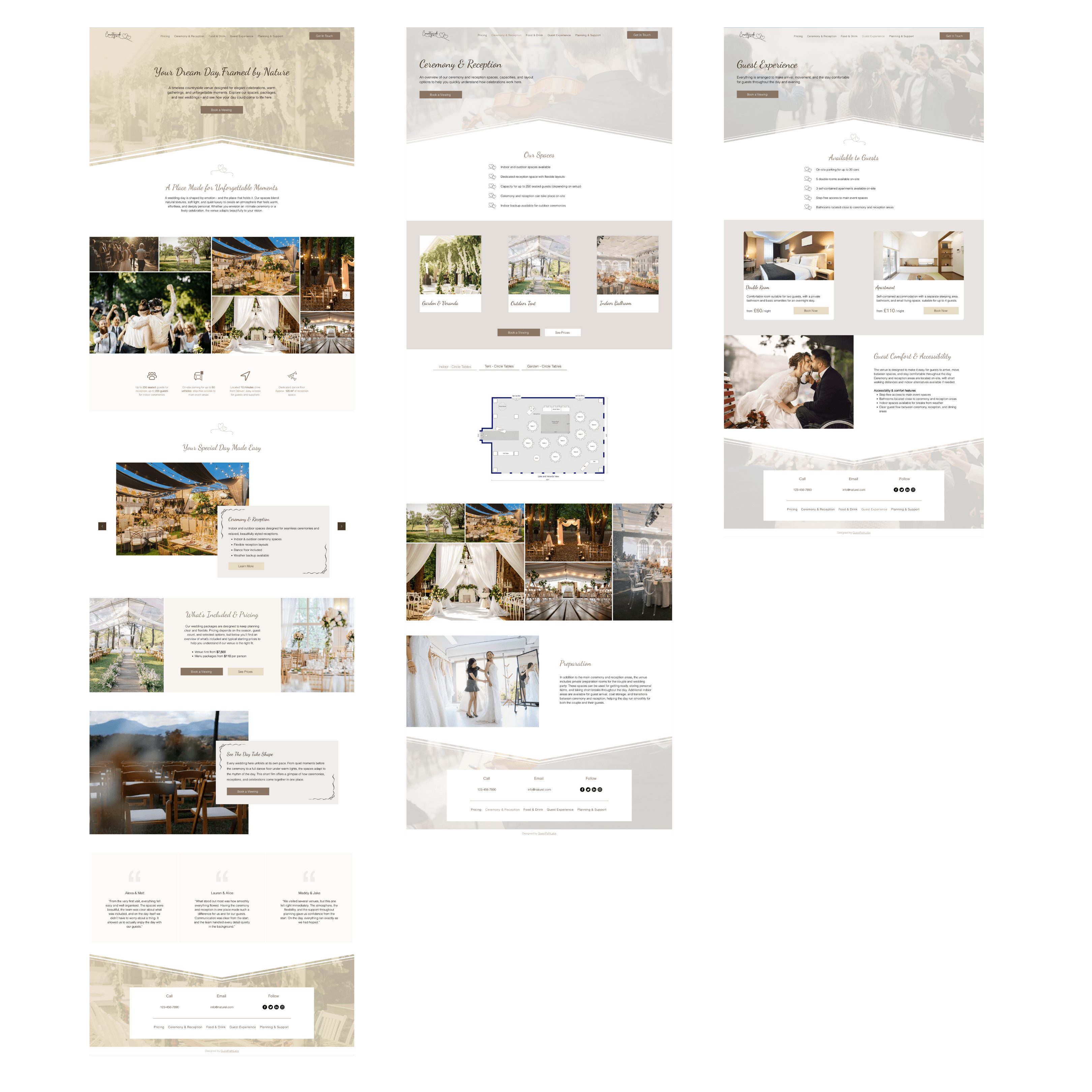
This case study looks at a user experience (UX) approach to creating a wedding venue website. Based on industry research and actual user behavior, the design focuses on clarity rather than marketing. The result is a structured website that helps users make informed decisions in real-life situations.


Project Type:
UX Research & Website Design
Timeline:
3 weeks
Tools:
Wix Editor | Miro
Overview
This project aimed to create a wedding venue website that emphasizes clarity and usability over marketing language. The goal was to help couples quickly determine if a venue suits their needs while also allowing for deeper exploration once they have a shortlist.
Instead of a purely inspirational site, the focus was on building a practical, information-rich experience that mirrors how couples research and compare venues online.
View live site here -> Wedding Venue
This site is also available as a template in my Etsy shop -> Wedding Venue Template Etsy
Let’s audit, optimise, and redesign what matters most to your users and your team.
planning & definition
The project began by defining the website’s role and addressing the expectations of both venue owners and couples. At this stage, the focus was on:
agreeing on the primary goal of the website (supporting viewing bookings without replacing conversations) - identifying key user groups (early-stage researchers versus shortlisted couples)
defining which information should be immediately visible and which could be placed deeper in the site
deciding what information should not appear on the homepage to prevent overload
This planning phase helped clarify the distinctions between:
homepage versus detail pages
brochure content versus website content
marketing content versus decision-support content
The outcome was a clear set of requirements outlining what the website needed to achieve at each stage of the user journey.
Research & evidence
I have completed multiple sets of desktop research in order to base the design on real behaviours rather than assumptions.
Literary Review
I reviewed various industry research and user insights about selecting wedding venues and online behavior. Key sources included:
GetWedPro (Wedding Industry Reports) - this source helped me understand how couples search for venues and the role of websites in their decision-making processes
The Knot (Wedding Planning & Budget Research) - this source provided insights into the venue's role in overall budget allocation and decision priority
Tripleseat (What Clients Look for in a Wedding Venue) - this source validated the information couples actively seek when evaluating venues
Root Analysis (How Wedding Venues Can Boost Sales in 2025) - this source offered understanding around expectations regarding pricing transparency and communication
Competitor Review
I analyzed 10 to 15 successful wedding venue websites, focusing on:
how quickly key information was accessible
how pricing was presented (or concealed)
how ceremony, reception, and guest information was organized
where confusion or friction occurred
This research revealed a consistent trend: visually appealing sites often lacked clarity, while clearer sites performed better by reducing uncertainty early in the user's journey.
Structure, Sitemap & Content Strategy
From the research findings, I developed a sitemap and content framework focused on progressive disclosure. Key decisions included:
keeping the homepage centered on reassurance and filtering rather than detail
separating ceremony and reception information from planning and support content
treating food and drink, guest experience, and accommodation as their own decision-support pages
structuring pages more like a knowledge base than a marketing brochure
Each page had a specific purpose:
Ceremony & Reception → explain how the day will unfold in terms of space
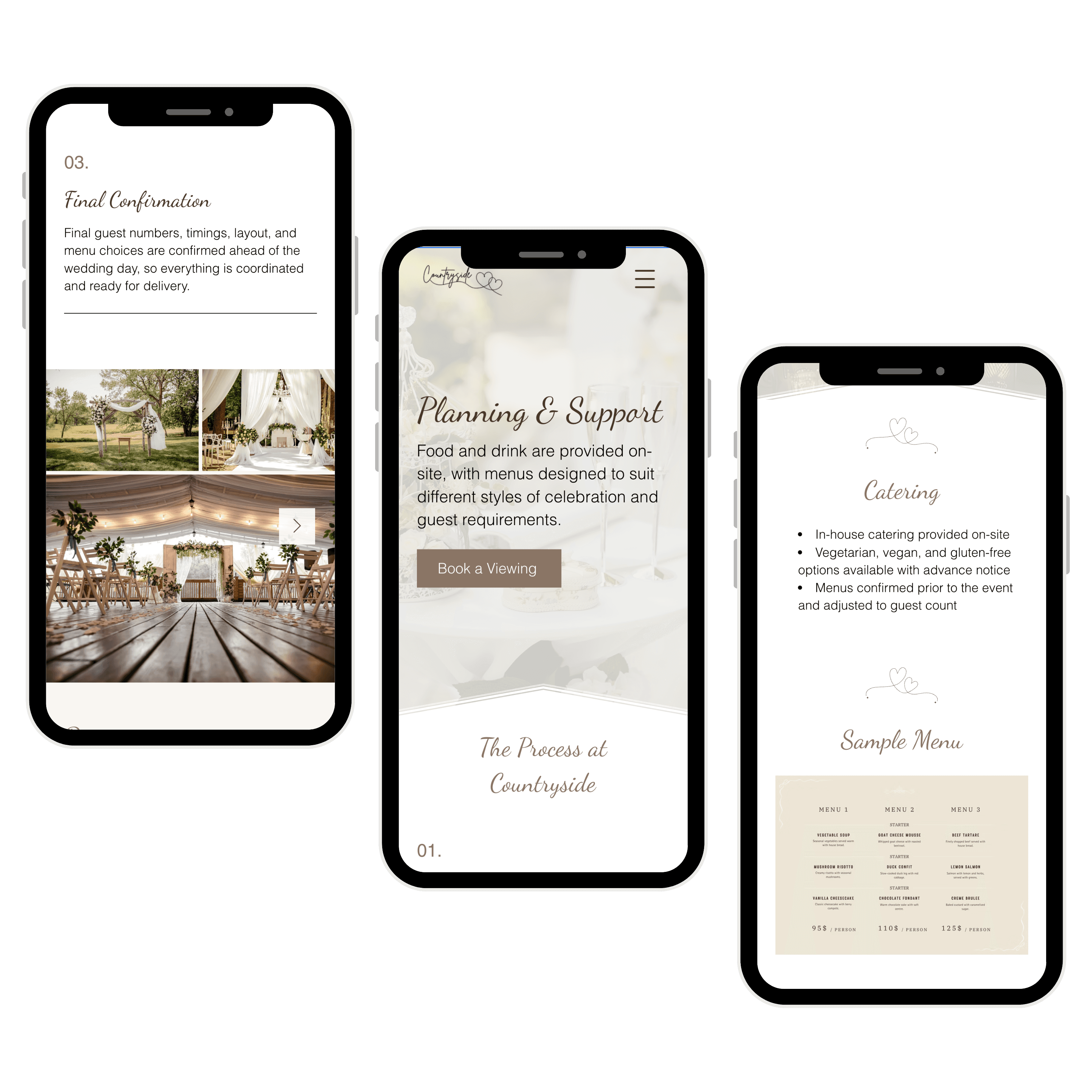
Food & Drink → clarify catering responsibilities, dietary options, and pricing expectations
Guest Experience → alleviate guest-related uncertainties
Planning & Support → explain processes, coordination, and flexibility
This method ensured the information was easy to scan, compare, and trust.
Design & Build
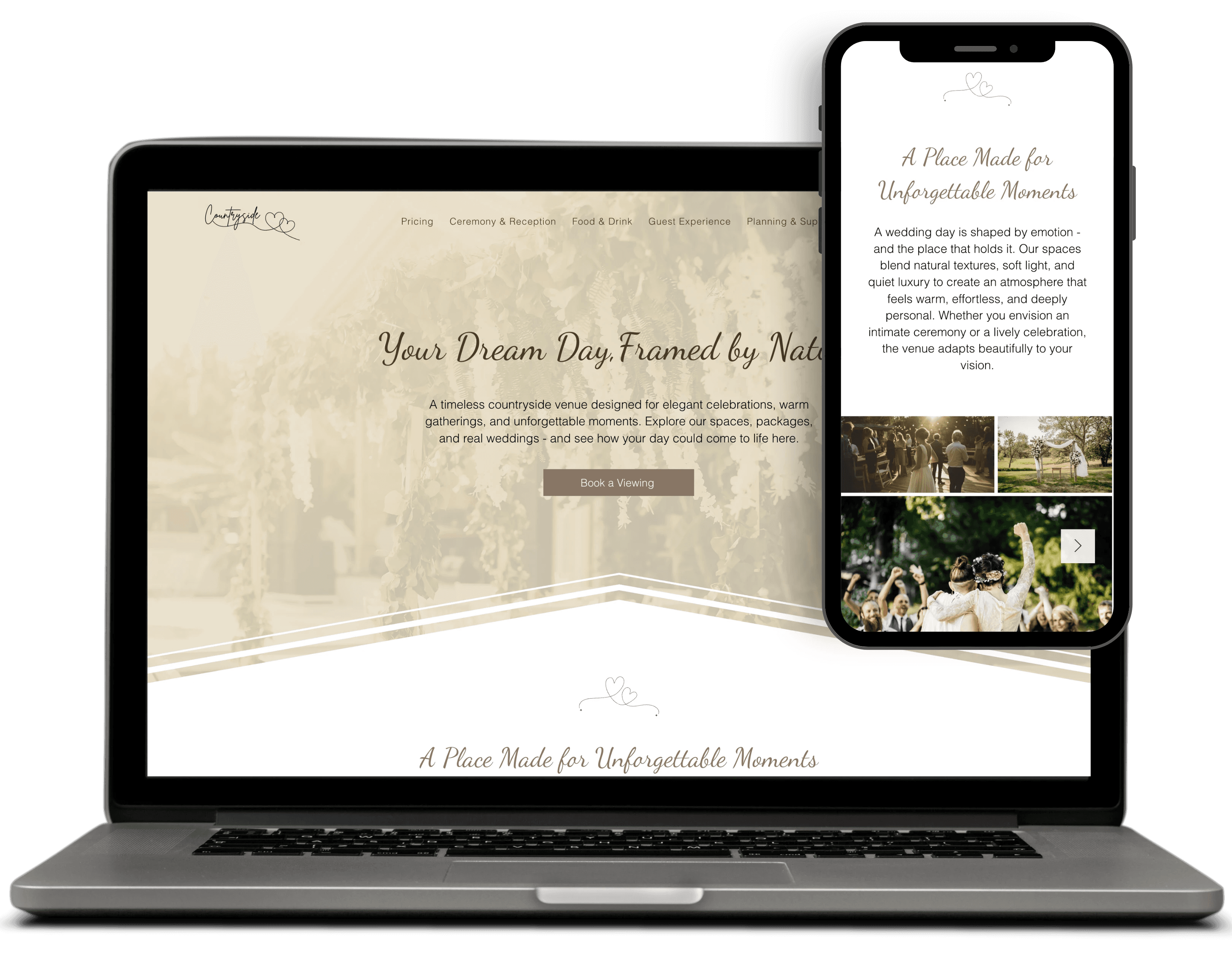
With the structure and content established, the website was built on Wix, focusing on:
clear visual hierarchy
scannable sections with factual text
tabbed layouts and cards for complex information
minimizing cognitive load on each page
The design consciously avoided heavy marketing language in favor of:
brief, straightforward descriptions
clear labels
predictable layouts
outcome & learnings
The final result is a wedding venue website template that:
mirrors real couple behavior instead of assumptions
balances inspiration with clarity
supports both initial research and detailed planning
can be modified by venue owners without losing its structure
This project highlighted the significance of content strategy and information architecture in hospitality websites, particularly in emotionally charged and high-stakes decisions like wedding planning.